
 By Usman Abbasi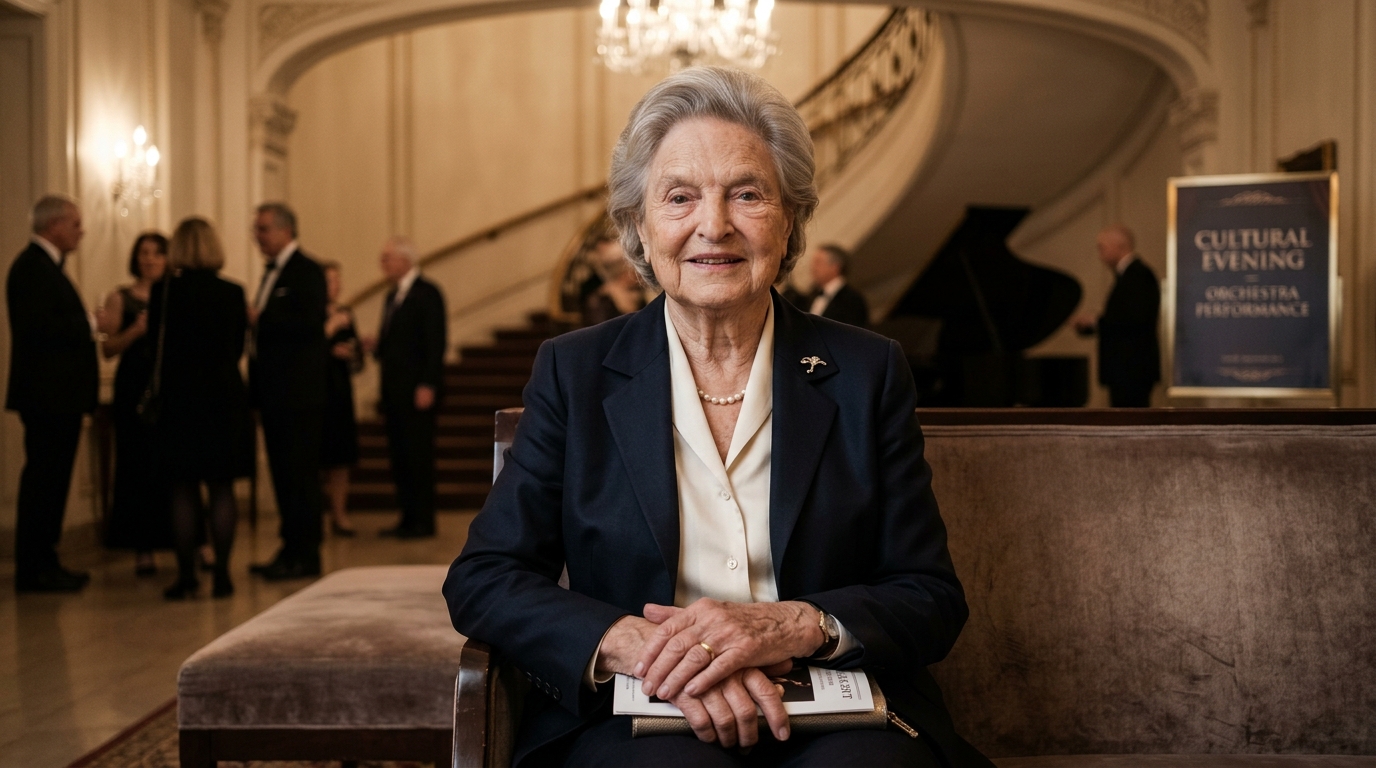
For much of her life, Annaliese Witschak was known mainly because of the man she married. That description, however, misses the more interesting story.
Born in northern Germany in 1934, Witschak experienced extraordinary loss during childhood. Her father died when she was three, and she was orphaned at 16 after her mother and only brother died within months of each other. Decades later, she would be remembered not simply as George Soros’s first wife, but as a devoted mother, music lover, author, arts patron, and longtime supporter of young performers.
Annaliese Witschak married Soros in 1960. Their marriage lasted more than two decades and produced three children: Robert, Andrea, and Jonathan. After their divorce in 1983, she chose not to remarry and instead built an independent life centered on family, friendships, travel, hospitality, and classical music.
Her story ended in New York on September 5, 2025, when she died of natural causes at 91. By then, her name had become closely associated with organizations dedicated to giving young musicians opportunities to develop their careers.
Annaliese Witschak at a Glance
| Detail | Information |
|---|---|
| Full name | Annaliese Witschak, later Annaliese Soros |
| Date of birth | January 3, 1934 |
| Birthplace | Verden an der Aller, northern Germany |
| Died | September 5, 2025 |
| Age at death | 91 |
| Profession | Arts patron, author, philanthropist |
| Known for | Marriage to George Soros and decades of arts philanthropy |
| Estimated net worth | $7.5 billion |
| Main income sources | 1983 |
| Relationship status | Divorced; did not remarry |
| Children | Robert, Andrea, and Jonathan Soros |
| Major cultural connection | Young Concert Artists, Pianofest in the Hamptons, Southampton Performing Arts |
Early Life: A Childhood Shaped by Loss
Annaliese Witschak was born in Verden an der Aller in northern Germany on January 3, 1934. Her father, Walter Witshchak, died in 1937. Her mother, Elisabeth, subsequently supported the family through various jobs, bookkeeping, and occasional writing for a local newspaper.
The greatest losses came when Annaliese was still a teenager. Her mother and only brother, Hans, died within six months of one another, leaving Annaliese orphaned at 16.
Her later obituary described those years as the loneliest period of her life. Yet the same account also points to something that remained important throughout her adulthood: music. She loved school, excelled academically, and was particularly influenced by her music teacher.
That early connection would eventually become more than a personal interest. Music became one of the defining threads of her adult life.
The Marriage That Put Her in the Public Eye
Annaliese Witschak married George Soros on September 17, 1960. Soros, who had been born in Budapest and moved to the United States in 1956, was still building the financial career that would eventually make him one of the world’s best-known investors and philanthropists.
The couple had three children: Robert, Andrea, and Jonathan. Their marriage eventually ended in divorce in 1983. Public sources do not provide a reliable account of the private reasons behind their separation, and there is little value in filling those gaps with speculation.
For Witschak, the end of the marriage became a new chapter rather than the end of her public story.
She did not remarry. Instead, according to her obituary, she rediscovered her independence and pursued interests that included music, travel, cycling, hiking, and close friendships.
A New Chapter Built Around Music
The most important part of Annaliese Soros’s later life was not celebrity. It was cultural philanthropy.
She became deeply involved with Young Concert Artists, the New York organization founded in 1961 by Susan Wadsworth to identify and develop exceptional young musicians. YCA’s programs provide emerging performers with opportunities ranging from professional management and concert debuts to educational residencies.
Witschak served on the organization’s board for more than 40 years. Her commitment was not limited to writing checks or appearing on donor lists. Her obituary describes her as someone who welcomed musicians into her apartment, allowing them to practice before New York performances and forming lasting relationships with them.
The Annaliese Soros Educational Residency Program was endowed in her name in 2004. The program has subsequently helped facilitate thousands of educational residencies for young musicians.
That legacy remains visible today. Young Concert Artists currently lists Annaliese Soros among its honorary directors, marked as deceased, reflecting the enduring importance of her contribution.
Southampton and the Hamptons Connection
Witschak’s commitment to music extended beyond Manhattan.
In 1981, she helped launch the Southampton Performing Arts festival, bringing classical concert programming to Southampton, New York. She maintained a summer home there for approximately six decades, making the community an important part of her life.
She later joined the board of Pianofest in the Hamptons in the early 1990s. Pianofest provides a summer master-class environment for pianists, and Witschak remained associated with the organization until her death. Its current board information lists her as a trustee emeritus.
Her cultural involvement also included institutions such as Carnegie Hall and the Metropolitan Opera. Public donor records show her name among supporters of major New York cultural organizations, including the New York Philharmonic and New York Landmarks Conservancy.
A Published Author With a Sense of Humor
There was another side to Annaliese Soros that is easy to overlook when her story is framed around philanthropy.
In 2007, she co-authored Dinner Party Disasters: True Stories of Culinary Catastrophe with Abigail Stokes. Published by Harry N. Abrams, the 96-page book collected humorous stories about dinner parties that went spectacularly wrong.
The book fits neatly with the picture painted by accounts of her later life: she enjoyed entertaining, welcomed people into her home, and did not take social mishaps too seriously.
Her interest in hospitality also appears in descriptions of her relationships with musicians. Young performers were not simply names on a roster; some became guests in her home and part of her extended circle of friends.
How Did Annaliese Witschak Make Money?
Unlike her former husband, Annaliese Witschak was not known for building a public business empire or financial career.
Her publicly documented identity was primarily that of an arts patron, author, board member, mother, and philanthropist. There is no reliable public record establishing a specific salary, business portfolio, investment portfolio, or other detailed income structure.
Arts and Cultural Activities
Her work with cultural organizations was primarily philanthropic rather than an identifiable source of personal income.
Book Publishing
Her 2007 book represented a published creative project, but there is no reliable public record showing how much she personally earned from it.
Investments and Assets
It would be irresponsible to assign specific investments, properties, or financial holdings to Witschak without documentary evidence.
Annaliese Witschak Net Worth
There is no reliable, independently verified figure for Annaliese Witschak’s personal net worth.
This is particularly important because online celebrity-biography sites sometimes attach precise dollar figures to people connected to billionaires. Such numbers can look authoritative while having no verifiable financial basis.
Witschak was married to George Soros for more than two decades, but her former husband’s fortune should not automatically be treated as her personal wealth. A spouse’s estimated net worth is not evidence of the other spouse’s individual assets.
Public sources also do not establish the terms of their divorce settlement. For that reason, Dolfier does not assign a speculative net-worth number to Annaliese Witschak.
The most accurate description is simply that her personal net worth was not publicly verified.
Personal Life and Family
Family remained central to Witschak’s life long after her marriage ended.
She and George Soros had three children: Robert, Andrea, and Jonathan. Her obituary also noted nine grandchildren, and described her relationships with family and friends as among the most important elements of her life.
Witschak did not publicly build an identity around celebrity. In fact, her later years appear to have been defined more by private relationships and cultural interests than by publicity.
She also maintained a connection with Germany despite the painful memories associated with her childhood there. Later in life, she regularly returned to Berlin, sometimes staying for extended periods during the city’s performance season. Her final trip to Berlin came in 2024, when she celebrated her 90th birthday.
What Happened to Annaliese Witschak?
Annaliese Witschak died in New York on September 5, 2025, at age 91. Her published obituary said she died of natural causes.
Young Concert Artists publicly mourned her as a longtime board member whose generosity and devotion to music education had shaped the organization. The group specifically highlighted her role in supporting artists, housing musicians, and establishing the educational residency program bearing her name.
Her death closed a life that had moved through several dramatically different worlds: wartime Germany, postwar uncertainty, marriage to a future financial giant, motherhood, New York society, and finally decades of quiet cultural philanthropy.
Final Takeaway
Annaliese Witschak’s most compelling story begins before she ever became associated with the Soros name.
She survived the loss of her parents and brother as a teenager, built a family of her own, and eventually created a life that revolved around music, friendship, hospitality, and support for emerging artists.
Her marriage to George Soros explains why her name became familiar. Her decades of cultural philanthropy explain why it endured.
By the end of her life, Annaliese Soros was remembered not simply as a billionaire’s former wife, but as a woman who used her time, relationships, and resources to help give young musicians something she understood the value of firsthand: an opportunity to build a future.
FAQs
Who was Annaliese Witschak?
Annaliese Witschak, later known as Annaliese Soros, was a German-born arts patron, author, philanthropist, and the first wife of investor George Soros. She was also the mother of their three children.
When was Annaliese Witschak born?
She was born on January 3, 1934, in Verden an der Aller in northern Germany.
When did Annaliese Witschak die?
She died on September 5, 2025, at age 91, according to her published obituary.
Was Annaliese Witschak married to George Soros?
Yes. Witschak and George Soros married in 1960 and divorced in 1983. They had three children together.
What was Annaliese Witschak known for besides her marriage?
She was particularly known for her support of classical music and young musicians. She served on the Young Concert Artists board for more than 40 years and was involved with Pianofest in the Hamptons and Southampton Performing Arts.
What was Annaliese Witschak’s net worth?
Her personal net worth was not publicly verified. There is insufficient reliable financial information to support the precise figures sometimes published online.