
 By Usman Abbasi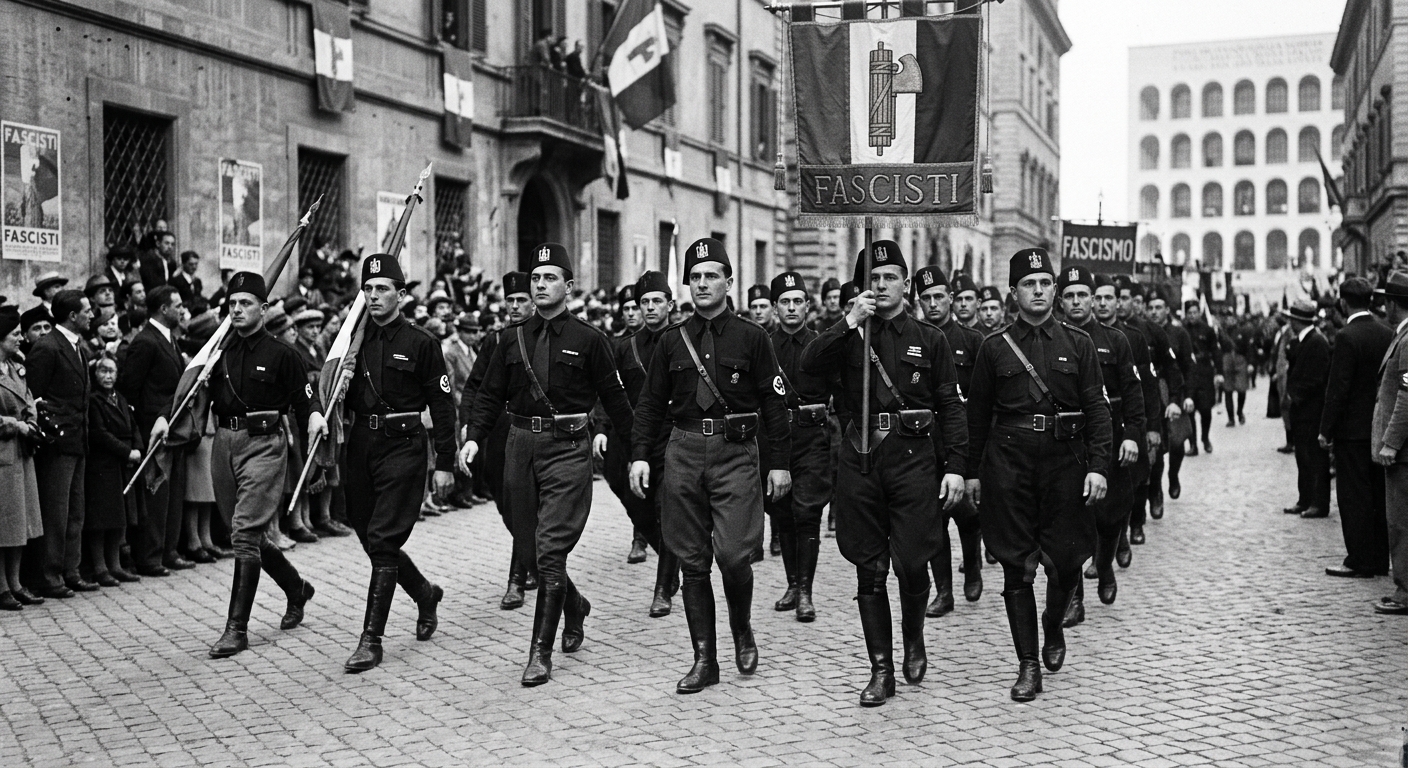
The term fascisterne is associated with fascists and the political movements that promoted fascism, particularly in Europe during the 20th century. Although the word has historical roots, understanding it requires more than simply defining it. Fascism developed through a combination of political instability, nationalism, economic difficulties, authoritarian leadership, and social conflict. Examining its origins and consequences can help explain one of the most influential and destructive political movements in modern history.
What Does Fascisterne Mean?
Fascisterne is a Danish term that can be translated into English as “the fascists.” It generally refers to people who support or participate in fascist political movements. The exact meaning can depend on historical and linguistic context.
Fascism is an authoritarian political ideology that places strong emphasis on centralized power, extreme nationalism, political obedience, and the interests of the state or nation over individual political freedoms. Fascist movements have appeared in different countries, and not every movement has followed exactly the same program.
Fascisterne and the Meaning of Fascism
To understand the term, it is important to understand fascism itself. Fascist movements typically reject liberal democracy and political pluralism. They often promote the idea that society needs a powerful leader and a unified national identity.
Political opponents may be portrayed as threats to national stability. In historical examples, governments influenced by fascist ideology restricted freedom of expression, weakened democratic institutions, controlled political organizations, and used propaganda to influence public opinion.
The Origins of Fascisterne
The rise of fascist movements was closely connected with the political and economic conditions of Europe after the First World War. Many societies experienced unemployment, inflation, political violence, social divisions, and dissatisfaction with existing governments.
Italy became one of the earliest countries where a major fascist movement gained political influence. Benito Mussolini established the Italian Fascist movement and eventually became prime minister in 1922. His government gradually dismantled democratic institutions and created an authoritarian state.
Why Fascist Movements Gained Support
There was no single reason why people supported fascist movements. Economic insecurity played a role, while fear of political revolution and dissatisfaction with established political parties also contributed.
Fascist leaders presented themselves as strong alternatives to governments that appeared unable to solve major national problems. They promised order, national strength, and political unity. Their messages could appeal to people who felt threatened by rapid social and economic change.
Propaganda was another important factor. Political movements used newspapers, public speeches, posters, rallies, and eventually radio and film to spread carefully designed messages.
Fascisterne and Political Power
Once fascist movements gained political authority, their relationship with democratic institutions changed dramatically. Instead of accepting political competition, authoritarian governments sought to concentrate power.
Opposition parties could be restricted or eliminated, independent organizations weakened, and criticism of the government suppressed. State institutions were increasingly placed under political control.
Leadership and Political Loyalty
Fascist systems often placed enormous importance on loyalty to a single leader. Leaders were presented as symbols of national unity and strength.
This created a political environment where disagreement could be treated as disloyalty. Rather than encouraging open debate, authoritarian systems promoted obedience and conformity.
Propaganda and Society
Propaganda played a central role in fascist politics. Governments attempted to influence how citizens understood their country, its history, and its supposed enemies.
Schools, newspapers, cultural organizations, and public events could all become instruments for promoting official ideas. Political messages were often repeated through powerful symbols and emotional language.
The Role of Nationalism
Extreme nationalism was one of the most recognizable characteristics of historical fascist movements. National identity was presented as something that required complete loyalty.
In some cases, this nationalism was combined with racial or ethnic theories that divided populations into groups considered more or less valuable. Such ideas helped create discrimination and persecution against minorities and other targeted communities.
Fascisterne During the Second World War
The history of fascism is closely connected with the Second World War. Nazi Germany under Adolf Hitler developed an especially radical form of fascist and racist dictatorship. Its ideology promoted aggressive nationalism, racial hierarchy, antisemitism, territorial expansion, and systematic persecution.
The Nazi regime was responsible for enormous destruction and mass murder, including the Holocaust, in which approximately six million Jews were murdered. Millions of other people were also persecuted and killed by Nazi Germany and its collaborators.
Italy under Mussolini became an ally of Nazi Germany, although Italian fascism and German Nazism were not identical ideologies. The war eventually resulted in the collapse of the major fascist governments in Europe.
The Decline of Fascisterne
The defeat of the Axis powers in 1945 dramatically weakened fascist movements across Europe. Mussolini’s government collapsed, while Nazi Germany was defeated by the Allied powers.
After the war, international efforts were made to prosecute individuals responsible for major crimes. The Nuremberg Trials became one of the most important examples of postwar efforts to hold Nazi leaders accountable.
Fascism After 1945
Although the major fascist regimes were defeated, extremist political movements did not completely disappear. Various far-right and neo-fascist organizations emerged in different countries during the decades that followed.
However, modern political movements described as fascist can differ significantly from the historical organizations of the 1920s, 1930s, and 1940s. Therefore, the label should be used carefully and based on political characteristics rather than simply as an insult.
Why Understanding Fascisterne Still Matters
Studying fascisterne and the history of fascism remains important because it demonstrates how democratic societies can become vulnerable to authoritarian politics.
Economic crises, political polarization, misinformation, social fear, and distrust in institutions can create conditions in which extreme movements gain attention. History shows that democratic systems depend not only on elections but also on independent institutions, freedom of expression, legal protections, and respect for political disagreement.
Lessons From History
One of the most important lessons is that political extremism can develop gradually. Democratic institutions may not disappear overnight. Instead, restrictions on political opposition, media freedom, civil liberties, and independent organizations can accumulate over time.
Understanding these historical patterns encourages people to examine political claims critically and recognize the importance of protecting democratic principles.
Conclusion
Fascisterne represents a historical subject that cannot be separated from the broader development of fascism, authoritarianism, nationalism, and political extremism. Fascist movements emerged under specific historical circumstances, gained support by promising order and national renewal, and ultimately caused profound political repression, war, persecution, and suffering.
Studying this history does not simply provide information about the past. It also offers an opportunity to understand how political systems function, why democratic institutions matter, and how societies can respond to dangerous forms of authoritarianism. By examining historical evidence carefully and avoiding oversimplified labels, readers can develop a clearer understanding of fascism and its continuing significance in discussions about politics and society.